MONGOLIAN HISTORICAL TOUR

MONGOLIAN HISTORICAL TOUR

$1480/Person
MONGOLIAN HISTORICAL TOUR
Duration 10 DAYS
Category
Travel season 0
Tour highlight

MONGOLIAN HISTORICAL TOUR / 10 DAY/

Explore Mongolia with full of beautiful nature and historical sites. This tour covers north and central Mongolia. Buddhism took firm root and adopted as the official religion of Mongolia in the second half of the 16th century. Tibetan Lamas came in the large numbers to organize the systematic transportation of religious literature into Mongolian, and this in turn greatly encouraged the growth of literacy amongst Mongols and the flourishing of Mongol culture.

Tour Highlights:

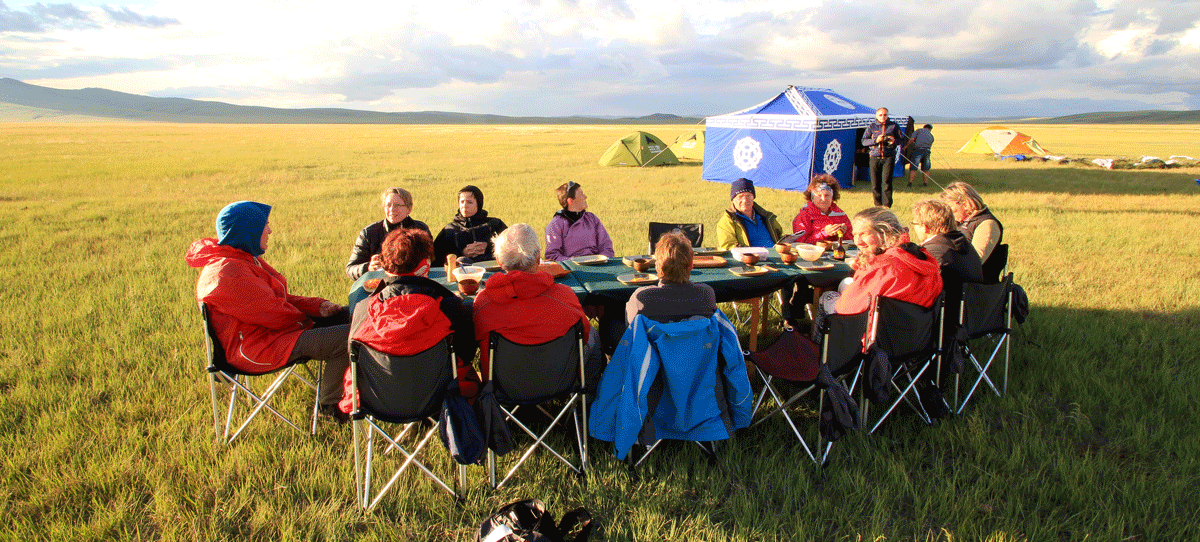
  • Get to know one of the planet's last nomadic communities, where a customary way of life persists as it did a thousand years ago. A country the size of Western Europe is home to just three million people, half of whom still travel annually with their animals and live in movable felt tents known as "Gers."
  • The most spiritual tour to Mongolia is the Buddhist Pilgrimage tour. Of all the Asian Buddhist nations, Mongolia is the one where Buddhism has had the biggest impact on society in terms of philosophy, literature, art, politics, medicine, and material culture.
  • Along the Buddhist pilgrimage tour with us, you will learn about nomadic culture, rich history of Mongolia and explore the natural beauty of different landscapes
  • The itinerary bellow customized for your needs and interest!
Itinerary
Day 1 Ulaanbaator City tour


·        Pickup from the airport in the morning qand Drop off at the hotel

·        Money exchange

·        Visiting the Mobicom center and getting a Mongolian Sim Card

·        Sukhbaatar Square

·        Lunch in a restaurant

·        Chingis Khan statue at Chinggis square

·        Visiting the city from the top (in Zaisan)

Chinggis Khaan National Museumwas established in 2019 by the decision of the Prime Minister U.Khurelsukh. The museum has more than 10,000 original exhibits ranging from exhibits of Modun Shanyu, the founder of the first nomadic state to the artifacts the activities of the kings and nobles of the Mongolian states, from Modun Shanyu, the founder of the Hun Empire, the first nomadic state, to the beginning of the 20th century, the artifacts they enjoyed and used, and major real events. , VR, interactive, and video technology, painting, hand painting, sculpture, blacksmithing, sewing, embroidery, and models are exhibited.

The Chinggis Khaan National Museum was established in 2019 - 2022 on the Mongolian Plateau where the great khan was born. He was recognized as a man of the millennium, a founder of the modern world, and the one who declared world peace. This museum is one of the major developments of Mongolian culture, founded by the resolution of President U.Khurelsukh and funded by the Mongolian government.

Chinggis Khaan National Museum is equipped with modern standard technologies. It has 6 floors of exhibition halls, special event halls, conference halls, the Chinggis Khaan Hall of Fame, and a library. Over 100 professional employees are engaged in the museum. The Chinggis Khaan National Museum has three main sections, including the ancient states before Chinggis Khaan, the Mongol Empire period, as well as the great Khan’s descendants’ period. Over 90 percent of artifacts are original, and Chinggis Khaan National Museum exhibitions cover the entire history of Mongol states. In addition, the museum’s AR (augmented reality) and VR (virtual reality) technology can enhance the viewer’s experiences

ZAISAN HILL

This tall landmark in front of the city offers the best views of Ulaanbaatar and the surrounding nature. The large monuments on the top of the hill were erected for the memory of soldiers died in World War II.Zaisan Hill is a perfect blend of modern architecture and tradition and history. Until recently, it was most well-known for the Zaisan Hill Monument atop the hill, a beautiful circular structure with a mural honoring allied Mongol and Soviet soldiers who fell during World War II. Now the hill is also home to a sprawling modern complex with plenty of amenities for tourists and residents alike.

·        Returning to the hotel (around 17 – 17:30 )

·        Overnight Accommodation: Hotel L+D = Lunch + Dinner

Day 2 UB City tour Statue and Museum

   Chingiskhaan museum

-  Choijin Lama Museum

Choibalsan statue

Choijin Lama Temple

Choijin Lama Temple under the Bond Khaganate

The Choijin Lama Temple complex was built between 1904 and 1908 at the order of the eighth Javzandamba Khutagt, spiritual leader of Mongolian Buddhism (or Bogd Khan) and later head of the Bogd Khaganate in Mongolia following its independence in 1911. The complex was dedicated to his younger brother, the sitting Choijin Lama, or protector of Buddhist teachings in Mongolia. The Choijin Lama served as the official state oracle of Mongolia and occupied the temple until his death in 1918.

One of the Few Surviving Historic Buddhist Buildings in MongoliaIn the 1920s, Communist revolutionaries took over the Mongolian government with the support of the Soviet Union and sought to suppress traditional religion around the country. Violent purges in 1937–38 led to the arrest and execution of thousands of lamas. All the monasteries in Mongolia—over 1,000—were shuttered, and most of them completely destroyed, including their contents of holy books and other religious objects. Only a few surviving buildings were nationalized and preserved for non-religious purposes—among them, the Green Palace or Winter Residence of the Bogd Khan, transformed into a museum, and the Choijin Lama Temple, which also survived intact. The site was converted into a Museum of Religious History in 1942, exhibiting artifacts from destroyed monasteries. While the purge of 1937–8 did not repeat itself, religious worship and ceremonies remained prohibited in Mongolia until 1990.

An Example of Chinese-style Religious ArchitectureThe temple of the Choijin Lama is an important example of Chinese-style religious architecture. The five temples included in the complex were built using blue bricks, with timber roofs supported on wooden posts and decorated with green tiles. Each temple was dedicated to a specific deity, including the Makhranz (or Maharajas—“great king” guardians of the four directions), the Shakyamuni Buddha, and the tantric deities worshipped by the Choijin Lama. The main temple is where the Choijin Lama would go into a trance and make oracular pronouncements to be interpreted by an attendant lama or monk.

2020 World Monuments WatchIn recent years, Mongolian Buddhism has experienced a steady revival as part of a national effort to strengthen Mongolian identity. The buildings of the Choijin Lama Temple complex and their collections constitute a unique resource and one of Mongolian Buddhism’s surviving links with the past. The site was included on the 2020 World Monuments Watch to lend support and visibility to the local and international efforts to design a master plan for the conservation of the site in partnership with the Arts Council of Mongolia. A Watch Day was held on May 17, 2020 at the site following lift on a ban of public activities in the country due do the COVID-19 pandemic. Activities included tree planting in the front yard of the temple, a papier-mâché art workshop for students, and a guided online tour of the site.

Restoring the Yadam TempleFollowing the creation of a conservation master plan in collaboration with the Arts Council of Mongolia (ACM), WMF organized a scientific advisory team to lend their expertise in support of the restoration of Yadam Temple in the Choijin Lama museum complex and develop local capacity-building activities focusing on traditional crafts and conservation techniques. Funded by the U.S. Ambassadors Fund for Cultural Preservation (AFCP) and the U.S. Embassy Ulaanbaatar, restoration work began at the site in May 2022 and was completed in October 2023, when an inauguration ceremony was held.

Located at the north end of the museum complex, the Yadam Temple houses a collection of copper and brass sculptures; scroll paintings; diverse artworks including papier-mâché sculptures and masks; engravings; textiles; silk appliqué; and instruments used for religious ceremonies. Eight of the objects displayed in the temple were included by the government in the list of exceptionally invaluable historical and cultural monuments of Mongolia.

Accomodation: Hotel    B+L+D

Day 3 City tour Museum and Monastery

·        Bogd Khan Palace Museum

·        Gandan Temple and Monastery

·        The fine Arts Zanabazar Museum

Bogd Khan[a][b] (c. 1869 – 20 May 1924) was the khan of the Bogd Khaganate from 1911 to 1924, following the state's de facto independence from the Qing dynasty of China after the Xinhai Revolution. Born in Tibet, he was the third most important person in the Tibetan Buddhist hierarchy as the 8th Jebtsundamba Khutuktu, below only the Dalai Lama and Panchen Lama, and therefore also known as the "Bogdo Lama". He was the spiritual leader of Outer Mongolia's Tibetan Buddhism. His wife Tsendiin Dondogdulam, the Ekh Dagina ('Dakini Mother'), was believed to be a manifestation of White Tara.

he complex was built between 1893 and 1903 named " Bilgiig hugjuulen badruulagch hlid’7 The temple of developing wisdom/ and dedicated to the 8-th Bogd Jivzundamba, the head of Mongolian religion.

On April 1, 1926, after Bogd khaan's death of illness in 1924, a state museum office was created and it was decided to transmit the remaining property of the Bogd khaan to public museum ownership.

We was converted to a museum building, displaying objects of historical and artistic value, religious idols,the royal collection of stuffed animals, and other items which had been owned or used by the Bogd Khaan.

Now the Bogd Khaan Palace Museum consists of seven Summer Prayer temples and the Winter palace, which was built in European style

The collections of the museum include unique and valuable objects related to Mongolia’s political, religious, and artistic history from the 17-th to early 20-th centuries: bronze castings, silk paintings, and papier mache icons made by well- known artists and artisans of the period, among others the first Bogd Zanabazar and his school; as well as objects owned and used by the eighth Bogd Jivzundamba and his wife Queen Dondogdulam, including royal clothing and equipment, gifts from domestic and foreign guests or representatives, and items purchased by the king for his own diversion.

The Winter Palace of the Bogd Khan, or the Bogd Khan Palace Museum, is a museum complex located in Ulaanbaatar, Mongolia. It was part of larger complex called the "Green Palace", an imperial residence of the eighth Jebtsundamba Khutughtu, who was later proclaimed Bogd Khan, or ruler of Mongolia. Alongside being the oldest museum, it is also considered as one with the biggest collection in Mongolia. The palace is the only one left from originally four residences[1] of the Bogd Khan.

Gandantegchinlen Monastery in Historical Perspective

This Tibetan-style Buddhist Monastery, also known as Gandantegchinlen Monastery, means Great Place of Complete Joy. The temple is thought to have been constructed by either the fourth or fifth Jebtsundamba Khutuktu (spiritual leader of Tibetan Buddhism in Mongolia) in 1809. It is situated in the heart of Ulan Bator. The temple once housed a number of monks who learned and practiced Buddhism. The temple for preserving the remains of the eighth Jebtsundamba Khutuktu was constructed in 1925. This monastery today serves as the monastery library. In the following year, further temples were also constructed and added to the monastery including Vajradhara Temple in 1840 and Zuu Temple in 1869.

The Fine Arts Zanabazer Mueum

Fine Arts Zanabazar Museum, Ulaanbaatar, Mongolia | HiSoUR ...

An art museum or art gallery is a building or space for the display of art, usually from the museum's own collection. It might be in public or private ownership, be accessible to all, or have restrictions in place.

the National Museum of Fine Arts famous forThe NFAC includes paintings, photographs, painted photographs, prints, drawings and studies, installation art, sculptures, documents, and memorabilia of Filipino artists who significantly impacted the nation's artistic heritage. It constitutes a large part of our country's artistic patrimony

Accomodation: Hotel / B+L+D/

Day 4 Genghis khan Golden Statue Terelj NP

Genghis Khan Statue Complex

Gorkhi Terelj National Park.

The National Park is known for its outstanding rock formations. Among them, 24 m tall Turtle shaped rock is worth to see.

Visit temple - Visit the Ariyabal meditation temple located about 1 km from the Turtle Rock. You should walk 20-30 min after parking at the parking lot. The temple was built between 1998 and 2004 in a scenic and energetic area. The vista is expanse and picturesque when seeing from the temple elevation.

Mongolia honor the wisdom of our monarch more than his victories. These days, Chinghis Khaan, the man of the millennium, is the subject of several honors. One of them is the enormous Genghis Khan statue that is located near the Tuul River. It is covered in 250 tons of lustrous stainless steel and stands 40 meters tall.

TERELJ NATIONAL PARK         

We will pick you up at 8:30 a.m. from your current location. The tour will next proceed to the Genghis Khan statue. We will go to Terelj National Park after exploring the Genghis Khan statue complex. Gorkhi Terelj is one of Mongolia's most visited and interesting parks.Turtle Rock is also one of Terelj's most recognizable sights. Notably, just a few kilometers from Turtle Rock is another must-see attraction: the Ariyabal Meditation Temple.

One of the most beautiful spots in Gorkhi-Terelj National Park apart from its nature is Aryabal Temple. This hidden in the mountains temple is located nearby Turtle Rock, 56 km away from Ulaanbaatar city. Surrounding areas attraction full of granite formation set among scenic valleys and hills with a winding river and groves of trees.


ARYBAL TEMPLE  

Aryabal is a Buddhist God who listens to all the prayers of humankind and releases humankind from suffering. It was built in the shape of an elephant’s head. The number 108 is an auspicious number in Buddhism. Therefore the stairs leading to the temple consist of 108 steps and symbolizes the elephant’s elongated trunk. Moreover, signs with 144 Buddhist teachings, written in English and Mongolian, lined the sides of the path to the temple.

The temple style is more tibetan styled like white square shaoed and white colored main building and porcelain roofs decorated with buddhist and religious signs. The decoration at the temple houses are amasing, especially depicting what is the paradise and what is the hell.

Aryabal Temple belongs to the Kalachakra sect of Buddhism, which was built in 1810-s by mongolian and tibetan artists and Buddhist monks from Manzushir monastery came to this temple to meditate. Later in 2000 buddhist monks of Lamiran temple in Ulaanbaatar initiated the project to restore this temple and completed the restoration work in 2004-2007. Lamiran temple monks sometimes come to this temple and cater religious service here and in many days of year it is open place for visitors and tourists, who want to thank for the god and do meditation.

Accomodation: Tourist camp/ B+L+D/

Day 5 Darkhan city - The Chingning Temple

Aglag Buteel Monastery, Temple

Kharagiin Khiid

Seated Buddha Statue

Amarbayasgalant Monastery /Soyombot hiid/

AGLAG BUTEELIIN KHIID

Aglag Buteeliin Khiid is located approximately 100 km from Ulaanbaatar. These carved rocks are the work of the students and teachers from the Buddhist college.

“Monastery of Tranquil Felicity”, is one of the three largest Buddhist monastic centers in Mongolia. The monastery complex is located in the Iven Valley near the Selenge River, at the foot of Mount Büren-Khaan in Baruunbüren sum (district) of Selenge Province in northern Mongolia. The nearest town is Erdenet which is about 60 km to the southwest.

The monastery was established and funded by order of Manchu emperor Kang Xi or Enkh-Amgalan Khan to serve as a final resting place for Zanabazar (1635–1723), the first Jebtsundamba Khutuktu, or spiritual head of Tibetan Buddhism for the Khalkha in Outer Mongolia. According to tradition, while searching for an appropriate site to build the monastery, the exploratory group came across two young boys, Amur and Bayasqulangtu, playing in a field on the steppe. They were inspired to build the monastery on that very spot and to name it after the two children, Amur-Bayasqulangtu. Construction took place between 1727 and 1736 and Zanabazar’s remains were transferred to a newly created temple in 1788.

Amarbayasgalan Monastery

The Kharakhoum Museum is a museum in Kharkhorin, Mongolia. The museum is dedicated to exhibiting artifacts from Mongolian history

Everything is beautifully designed and well displayed. The exhibits include dozens of artefacts dating from the 13th and 14th centuries that were recovered from the immediate area, plus others that were found from archaeological sites in other parts of the provinces, including prehistoric stone tools.

The museum contains artifacts from excavations in the ruins of Kharkhorum. The museum contains artifacts from the Hunnu period, Liao dynasty, the Uyghur Khaganate, the Mongol Empire and Rouran Khaganate.

Kharkhorin (or Karakorum as often called in Western literature) remained the capital of Mongolian empire until under Kublai Khaan, Chinggis Khaan’s grandson, the capital was moved to Xanadu at theon the south-eastern edge of the Mongolian plateau. Previously, the area had been the center of a succession of nomadic cultures including the Turk, Uyghurs, Khitans, and Nirun. (https://montsame.mn/en/read/236919). Kharkhorin was razed to the ground by troops of the Ming Dynasty after the fall of the Yuan dynasty in AD 1368. Mongolia’s oldest monastery, Erdene Zuu, was built upon and from the ruins of the ancient city in 1585, the year the Mongolia embraced Tibetan Buddhism as the official state religion. The main temples of Erdene Zuu survived the communist era, when many other monasteries were destroyed, and after 1990 Erdene Zuu was re-established as the most important monastery in Mongolia. The templesand wall with stupas is a famous site, and among the most visited ones in

MONUMENT TO MONGOLIAN GREAT EMPIRE

In 1235, Genghis Khan's son, Gedei Khan, built Kharkhorum as the capital of the Mongol Empire. For numerous decades, it was the empire's political, cultural, and economic hub. The Erdene Zuu Monastery, one of Kharkhorum's most recognized sites, adds to its historical allure. It is one of Mongolia's oldest Buddhist monasteries, having been built in 1585 on the ruins of an ancient city.

Mongolia is one of the most unique attractions in the world. It is a country with few paved roads (most driving is off-roading), it is a country where much of the population still continues the nomadic way of life, and it is a country where many of the people still grow up in the horse saddle.One of the archeological attractions of Mongolia is the ancient Mongolian Empire capital of Karakorum and the Erdene Zuu Monastery occupying the site today. These attractions are two of the top attractions to explore in Mongolia.Buy Mongolian Calligraphy from the Country’s Best Calligraphists at Erdenesiin KhureeMake the Road Trip to Shankh Monastery

Accomodation: Hotel/ B+L+D/

Day 6 - 7 Kharkhorin

Take in Mongolia’s Oldest Monastery, Erdene Zuu monastery

Learn about the Mongol Empire at the Kharakhorun Museum

Take in the view from Monument for Mongol States

THE KHARKHOROUM MUSEUM

The Kharakhoum Museum is a museum in Kharkhorin, Mongolia. The museum is dedicated to exhibiting artifacts from Mongolian history

Everything is beautifully designed and well displayed. The exhibits include dozens of artefacts dating from the 13th and 14th centuries that were recovered from the immediate area, plus others that were found from archaeological sites in other parts of the provinces, including prehistoric stone tools.

The museum contains artifacts from excavations in the ruins of Kharkhorum. The museum contains artifacts from the Hunnu period, Liao dynasty, the Uyghur Khaganate, the Mongol Empire and Rouran Khaganate.

Kharkhorin (or Karakorum as often called in Western literature) remained the capital of Mongolian empire until under Kublai Khaan, Chinggis Khaan’s grandson, the capital was moved to Xanadu at theon the south-eastern edge of the Mongolian plateau. Previously, the area had been the center of a succession of nomadic cultures including the Turk, Uyghurs, Khitans, and Nirun. (https://montsame.mn/en/read/236919). Kharkhorin was razed to the ground by troops of the Ming Dynasty after the fall of the Yuan dynasty in AD 1368. Mongolia’s oldest monastery, Erdene Zuu, was built upon and from the ruins of the ancient city in 1585, the year the Mongolia embraced Tibetan Buddhism as the official state religion. The main temples of Erdene Zuu survived the communist era, when many other monasteries were destroyed, and after 1990 Erdene Zuu was re-established as the most important monastery in Mongolia. The templesand wall with stupas is a famous site, and among the most visited ones in 1235, Genghis Khan's son, Gedei Khan, built Kharkhorum as the capital of the Mongol Empire. For numerous decades, it was the empire's political, cultural, and economic hub. The Erdene Zuu Monastery, one of Kharkhorum's most recognized sites, adds to its historical allure. It is one of Mongolia's oldest Buddhist monasteries, having been built in 1585 on the ruins of an ancient city.

Mongolia is one of the most unique attractions in the world. It is a country with few paved roads (most driving is off-roading), it is a country where much of the population still continues the nomadic way of life, and it is a country where many of the people still grow up in the horse saddle.One of the archeological attractions of Mongolia is the ancient Mongolian Empire capital of Karakorum and the Erdene Zuu Monastery occupying the site today. These attractions are two of the top attractions to explore in Mongolia.Buy Mongolian Calligraphy from the Country’s Best Calligraphists at Erdenesiin Khuree Make the Road Trip to Shankh Monastery

While you’re in Kharkhorin, do yourself a favor and make the road trip to Shankh Monastery. The monastery is 25 kilometers south of Kharkhorin and is one of Mongolia’s oldest and most historically significant monasteries.Dating back to 1647, the main temple is famous for its seven Kalachakra Mandalas which portray all 722 Kalachakra deities. It’s the only piece of its kind in Mongolia.


Accomodation: Hotel/ B+L+D/

Day 8 Ovurkhangai city

Make the Road Trip to Shankh Monastery

Tövkhön Monastery

Shankh is the oldest monastery in Mongolia, founded in 1647 by Zanabazar (1635-1723), a revered sculptor, politician, religious teacher, diplomat and living Buddha, who became Mongolia's first Bogd Khan (God King). Known as the West Monastery, it was one of the foremost seats of Buddhist teaching and practice in the country for almost three centuries. At its height, Shankh consisted of several schools specialized in Tantric rituals, particularly the Kalachakra, philosophy and astrology. It housed over 1,500 monks and served the religious, medical and educational needs of the region.

In 1924, three years after thousands of Bolshevik forces had poured in from Russia, Mongolia became the world's second communist country. While an uneasy truce initially prevailed between the government and the monasteries, some of the latter's property and herds were seized in 1929, arrests and executions came in 1932 and a bloody purge began in earnest in 1937. The reign of terror against religion was ruthless and coincided with a drive to eliminate "rightist elements". It is believed that by 1939 some 27,000 people had been executed (3% of Mongolia's population), of whom 17,000 were monks.

It was in this context that in 1937 Shankh Monastery was closed, its temples burned and most of its monks arrested and executed or sent to labor camps in Siberia. Five monks who were only young boys at the time were spared and sent back to their families. During the 53 years of repression that followed, these five monks kept the teachings they had received alive at great risk to themselves, preserving sacred objects and scriptures, and holding secret meetings during which they performed the rituals and recited the prayers that had come to Mongolia from Tibet centuries earlier.

The collapse of the Soviet Union in 1990 led to decolonization by default in Mongolia and in May of that year the constitution was amended to permit multiparty elections in July. That same year the surviving Shank monks reopened the monastery and began the restoration of its main temple. While the communists have been in and out of power since that time, democracy has taken hold and religious persecution is now a thing of the past in Mongolia. Yet, the majority of Mongolians have experienced a sharp decline in living standards, education and health care. Mongolia remains a poor country, ranking 117th in the world on the United Nations' Human Development Indicator in 2003.

SHANKH MONASTERY TODAYToday a small monastic community once again practices at Shankh. It is composed of the five monks who survived the 1937 purge, now well into their 70s, a younger disciplinarian and a dozen or so monks ranging in age from about 9 to 21. With very limited means they have completed the restoration of the main temple but are lacking in everything needed to ensure the monastery's further development, such as teachers, writing materials and the means to house and feed the students, who continue to live with their families and depend on them to meet their basic needs, as well as to continue to rebuild and restore.

In 1993, responding to the request of senior Mongolian monks, His Holiness Tenzin Gyatso, the 14th Dalai Lama, sent three Tibetan monks from Namgyal Monastery in Dharmsala, India, to help foster a renaissance of Buddhism in Mongolia. One of those monks was The Venerable Tenzin Yignyen, who taught at Ganden Monastery in Ulaan Baatar from 1993 to 1995 and who now teaches Buddhist philosophy and arts at Hobart and William Smith Colleges in Geneva, N.Y.Since 1995, Tenzin has maintained close ties with Mongolia in general and in particular with Shankh Monastery, whose spiritual and material development he continues to assist. In June 2004, with the generous help of a few individuals, Tenzin provided Shankh with a cash infusion of $1,000 (U.S.), which was gratefully received by the monks. However, much more is needed to reestablish this monastic community and allow it to respond to the thirst for spiritual knowledge of the people of Western Mongolia.

Accomodation: Hotel/ B+L+D/

Day 9 Deer stone Tuv aimag

1300-year-old Stele of Tonyukuk the Wise

Tövkhön Monastery, one of Mongolia's oldest Buddhist monasteries, is located on the border of Övörkhangai Province and Arkhangai Province in central Mongolia, about 47 km (29 mi) southwest of Kharkhorin.

Tövkhön Monastery was first established in 1648, by the 14-year-old Zanabazar, the first Jebtsundamba Khutuktu and spiritual head of Tibetan Buddhism for the Khalkha in Outer Mongolia.[1] He determined that the location on the Shireet Ulaan Uul mountain, overlooking a hill at 2,600 meters above sea-level, was an auspicious location. The first physical structures were built upon his return from studying in Tibet in 1653. Zanabazar, who was a gifted sculptor, painter, and musician, used the monastery, originally called Bayasgalant Aglag Oron (Happy Secluded Place), as his personal retreat over the course of 30 years. While there he created many of his most famous works. It was also where he developed the soyombo script.

The monastery was destroyed in 1688 by Oirat Mongols, during their military campaign against Eastern Khalkha Mongols. Restored in 1773, the monastery suffered severe damage during the Stalinist purges of the late 1930s, as Mongolia's communist regime sought to destroy the Buddhist religion in the country.[1]

Religious activities at the monastery restarted in 1992, and restoration of the monastery's grounds was completed in 1997. Two original temples and two stupas from the 17th century still stand, along with additional temples built in the 18th century. Ceremonies were staged to re-consecrate the monastery and a new statue of Gombo Makhagal (Mahakala) was carved and placed there. The monastery was inscribed as a UNESCO World Cultural Heritage site, in 1996. Several monks now reside and practice at the monastery full-time.

A memorial complex consisting of the stele of Tonyukuk the Wise, who served as an advisor to three successive khans of the Turkic Khaganate, and a place of sacrifice is located northwest of Bayantsogt Mountain in Erdene soum, Tuv aimag, and 66 km southeast of Ulaanbaatar city. The complex is put under special protection.

Alongside two inscriptions, there is an engraved stone platform, a kurgan stelae with its top part broken, small standing stones, pottery, bricks, and an irrigation system located at the site.

Due to being worn down by years of exposure to the wind and sun as well as damages, some parts are noticeably darker. There are 62-rowed inscriptions on 8 sides of the two monuments. For instance, while the 217-cm-tall first inscription monument has 37 rows of inscription, the second one that stands 243 cm tall has rows 38 to 62.


With the inscription saying, “But should a people, ruled by a kagan in any land whatever, have only worthless men [at its head]  what misfortune would it not be for it. For the Turkish Bilge kagan’s people, I have had this written. I the wise Tonyukuk,” it proves that the inscriptions were made when he was still alive. Researchers have also found that the inscription tells about the social situation of that time from Tonyukuk’s viewpoint.

Born of the Ashina noble family from which most powerful aristocrats and noblemen of the Turkic Khaganate originated, Tonyukuk the Wise lived between the years of 646 to 732. After serving as an advisor for Qapaghan Khan and Kutulug Khan, he continued to work under Bilge Khan until his death at the age of 86. The Turkic Khaganate (or the Gokturk Khaganate) was a ruling Empire in Central Asia in 552-745.

 Researchers have been conducting studies on the stele of Tonyukuk since 1897. It is believed that the monument was erected between 720 and 734.

In the framework of a joint project by the Ministry of Education, Culture, and Science and TIKA on the protection and restoration of Turkic monuments in Mongolia, fences have been constructed for the 1300-year-old stele’s complex, providing protection for one of the monuments under state protection in Mongolia.


A memorial complex consisting of the stele of Tonyukuk the Wise, who served as an advisor to three successive khans of the Turkic Khaganate, and a place of sacrifice is located northwest of Bayantsogt Mountain in Erdene soum, Tuv aimag, and 66 km southeast of Ulaanbaatar city. The complex is put under special protection.

Alongside two inscriptions, there is an engraved stone platform, a kurgan stelae with its top part broken, small standing stones, pottery, bricks, and an irrigation system located at the site.Due to being worn down by years of exposure to the wind and sun as well as damages, some parts are noticeably darker. There are 62-rowed inscriptions on 8 sides of the two monuments. For instance, while the 217-cm-tall first inscription monument has 37 rows of inscription, the second one that stands 243 cm tall has rows 38 to 62.

With the inscription saying, “But should a people, ruled by a kagan in any land whatever, have only worthless men [at its head]what misfortune would it not be for it. For the Turkish Bilge kagan’s people, I have had this written. I the wise Tonyukuk,” it proves that the inscriptions were made when he was still alive. Researchers have also found that the inscription tells about the social situation of that time from Tonyukuk’s viewpoint.

Born of the Ashina noble family from which most powerful aristocrats and noblemen of the Turkic Khaganate originated, Tonyukuk the Wise lived between the years of 646 to 732. After serving as an advisor for Qapaghan Khan and Kutulug Khan, he continued to work under Bilge Khan until his death at the age of 86. The Turkic Khaganate (or the Gokturk Khaganate) was a ruling Empire in Central Asia in 552-745.

Researchers have been conducting studies on the stele of Tonyukuk since 1897. It is believed that the monument was erected between 720 and 734.

In the framework of a joint project by the Ministry of Education, Culture, and Science and TIKA on the protection and restoration of Turkic monuments in Mongolia, fences have been constructed for the 1300-year-old stele’s complex, providing protecttion for one of the monuments under state protection in Mongolia.


Day 10 Ulaanbaator
Day 10 Ulaanbaator


MANZUSHIR MONASTERY

DASHCHOILIN MONASTERY

It was built in 1733 lies on the southern end of the Bogd Khaan National Park. At one time the monastery had 70 temples and more than 1000 lamas. Unfortunately, the Manzushir monastery was destroyed in 1932 by the Communists. Nowadays, the only remaining temple has been restored to its former glory. A visitor to the area can enjoy the beautiful landscape, visit the museum displaying some original photos and artifacts of the temples and displays of the flora and fauna of the surrounding area, touch the copper bowl that  once fed 1000 lamas, and take a hike to visit the paintings of Taras and deities on the rocks overlooking the valley.   

Its ruins are located approximately 15 kilometers (as the crow flies, 43 kilometers by car) south of the Mongolian capital Ulaanbaatar on the south slope of Bogd Khan Uul mountain.

This monument is one of the 3 remaining monasteries of its type in Mongolia. Originally built on another location in 1890, it used to be an important religious place in Ulaanbaatar, with a capacity of 100 to 600 lamas or monks inside of its walls, this monastery stopped its activity and has been destroyed in 1938 under governmental pressure.

It is now located in the Sukhbaatar district, 8th sub district, very close to the Embassy of China, and near Baga toiruu street from where you can see the colorful roofs of the monastery. It is definitely a peaceful place to have rest.

UB HOTEL

Day 11 Fly back
Day 11 Fly back

Depature

Tour price includes/ Tour price excludes
What’s included in the Price? • Private English-speaking guide at all times, • 12 nights’ accommodation based on twin/double (Hotel 4*) and twin share (Tourist camp) • All meals as listed: Breakfast – 13, Lunch – 13, Dinner – 13, • Private Transfers/Transport with Mini bus / Country Bus/ • The program states the admission fee to the monastery. Note: the cost of the tour does not include any additional fees for taking pictures inside the monastery. • Complementary drink water during the tour What’s NOT included in the Price? • Visa to Mongolia (Get in advance), • International flights &Travels insurance • Hotel early check-in and late check-out • Tipping and other personal expenses • Other services not mentioned in the itinerary

Tour Price includes

Tour price excludes