SPRING FESTIVAL&EAGLE FESTIVAL 2025 MARCH 16th-23rd

SPRING FESTIVAL&EAGLE FESTIVAL 2025 MARCH 16th-23rd

$850/Person
SPRING FESTIVAL&EAGLE FESTIVAL 2025 MARCH 16th-23rd
Duration 7 DAYS
Travel season 0
Tour highlight


Itinerary
DAY 1 Attend Eagle Festival March 16th

DAY 1SPRING FESTIVAL 2025

ITINERARY

·        09:00–09:10: Opening ceremony

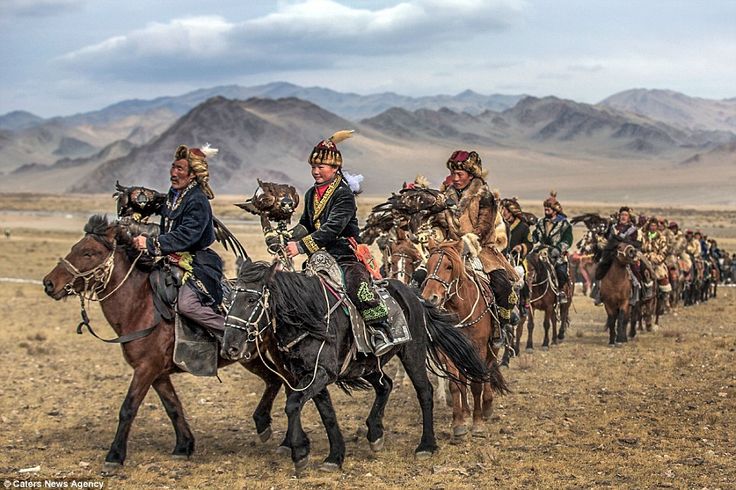
•09:10–09:30: Parade of Eagle Hunters

•09:30–10:00: Kazakh Fork Performance

•10:00–10:30: Uriankhai Archery and Horse Archery competition

•10:30–11:00:Drawing competition

•11:00–11:30: “Khan Hunt” / “Kush Kuu” traditional ankle bone game competition

•11:30–12:00: Best handcrafted items competition

•12:00–13:00:Competition of Eagle Hunting

•13:00–13:30: Girls’ horseback riding contest“Kyz Kuar” the Kazakh National Game

•13:30–14:00: Tug-of-war game competition / “Kokpar”/

•14:00–15:00: Games SWING tournament and taking commemorative photos

•15:00–16:00: Closing ceremony / Prize awards

Let me know if you’d like any specific details clarified!

Eagle Calling Event


The first day is mostly allocate for the eagle hunters to demonstrate the different aspects of the eagle training and hunting skills. The first competition is a calling event.
Three circles mark the field, each with varying numbers of points – 6, 8, and 10. The eagle is bring to the top of the nearby hill, while its hunter awaits on his horse in a given circle.
The eagle is let go, flying towards and landing directly on the hunter’s arm. The further the ring, the higher the point. Several confident hunters go to the circle 10.

Many of their eagles fly in a straight line to their hunters, while others take a longer road, checking nearby rocks for small rodents, or even disappearing high in the sky. during competition some eagles loose, fighting among themselves, or landing with another on a hunter’s arm. The younger hunters tend to use the lower numbers as they hone their calling skills.

Shyrga Tartu – Lure Grabbing
The next event is similarly calling the eagles from the top of the mountain. However, instead of landing on the hunter’s arm, the birds have to grab a piece of rabbit fur of rabbit tied on the rope and leave trailing on the ground behind the horse. In previous years, the horses were pulling actual dead rabbits or foxes, but the most recent version only uses the fur. The more experienced pairs of eagle-men hunters would succeed with the horse galloping at full speed. Less able ones would still their horses and await the eagle to land on the fur.

Urianhai Archery Competition
While the main event takes place in the arena, a contest of archery takes place all day long. With heavy bows and long arrows, these archers put on quite a show.
The morning of the second-day start by a continuation of the calling event, where only a few selected from the day before were able to participate. Only the best display of Kazakh horsemanship and hunting from the first day of Golden Eagle Festival compete on the last day.

Kyz Kuar – Girls Chasing and Whipping Boys
Also called the “Girl chase,” both man and woman are racing side by side on their horses. The man tries to escape the wrath of the women who whips him tirelessly. Some men are better at avoiding the whipping than others. Some women are better, or at least more eager, at “beating” than others. This event is hilarious, and you can tell that each pair is having fun.

Kukhbar – Goat Skin Competition
The game is a tug of war over a goat carcass between two riders on horses. It used to be an actual dead goat, but the more recent events use a woolen decoy. This game is probably the most competitive of all the different contests. Each participant fully committee with their full strength to pull the “carcass.” In a few occasions, disputes arose, with participants appearing on the judging platform and angrily complaining. One or two times, another rider would join in the argument. The trio would then pull, gallop, turn, twist, sometimes even push their way through the crowd. Or set the horses again at full speed racing side by side, while the men pull the carcass.

Best Dressed Men and Women
The costumes were all unique, a display of various customs and traditions, all high in colors, different styles of clothes and hats in comparison to the Mongol Kazakhs.
A Kazakh Festival for Kazakhs
Aside from the many tourists, the Golden Eagle Festival remains an important event for Kazakhs around the Altai region. Many Kazakh families attended, with kids playing around, and riding horses and camels alike. Many would shop at the stalls, try their end at the archery competition too. Or simply watch the contestants.

DAY 2: ALTAI TAVAN BOGD NATIONAL PARK

DAY 2: ALTAI TAVAN BOGD NATIONAL PARK

Shiveet Khairkhan Mountain -3281m

• After breakfast, we will go to Tavanbogd National Park, traveling through diverse wilderness views such as broad rock plains, green valleys, steep peaks of the Altai, and breathtaking wilderness terrain. Drive to Shiveet Khairkhan Sacred Mountain and stop to see the countless petroglyphs.

This mountain has long been considered a spiritual site. Shiveet Khairkhan Mountain is ornamented with almost 10,000 petroglyphs, several human statues, and Turkic stone figures. The majority of these engravings are found in the lower areas of Shiveet Khairkhan Mountain, on rocks along the east bank of the Khar Salaa River.

These rock etchings provide glimpses into numerous elements of life, including scenes of prehistoric hunters, early Mongol warriors, and the socioeconomic development of the time. The site includes standing Turkic stone figures, burial mounds, ritualistic stones, and statues. Beyond its cultural significance, the mountain is home to a varied range of animals, including the majestic Argali, ibex, snow leopards, wolves, eagles, and a variety of bird species.

Visitors to Shiveet Mountain can expect to see eagles, birds, and, if they're lucky, encounter some of the local wildlife, such as sheep

Accomodation: Decorated Kazakh Ger

DAY 3 ALTAI TAVAN BOGD FIVE SAITS and KHOTON KHURGAN LAKES

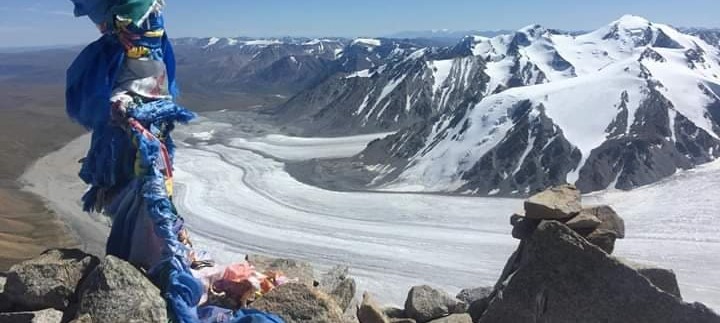
The Tavan Bogd Mountains are permanently snow-capped mountains.

Towering mountains, beautiful glaciers, green valleys, crystal lakes, a distinct culture, eagle hunters, obstacles, and adventure. Altai Tavan Bogd National Park is undoubtedly one of Mongolia's top three tourist destinations.

The Tavan Bogd Mountains are Mongolia's tallest peaks, with Khuiten Uul ('Cold Peak') reaching a height of 4374 meters (14,201 feet). Since 1956, when Mongolian climbers first explored the peak, approximately 700 people have climbed it. The Potanin Glacier, which spans 23 square kilometers, is surrounded by snow-covered mountains. The following peaks are: Nairamdal (4180 m), Olgii (4050 m), Malchin (herder), Bürged (eagle), and Nairamdal (4180 m). On a clear day, Kazakhstan can be seen 30 kilometers.

Enjoy magnificent views of all peaks. The Potanin Glacier and surrounding attractions.

Afrenoon drive to Khoton Khurgan lake region

Enjoy the dramatic steep valley along the river that drains from the Altai Tavanbogd Massif creating a series of beautiful lakes and waterfalls.

Surrounded snow-capped mountains, Khoton, Khurgan, and Dayan lakes with many pure and untouched mountain rivers, make an impressive landscape. All are totally unspoiled and unpolluted and are fabulous places to catch a wide variety of fish.

Accomodation: Kazakh Family / Wooden shared house/

DAY 4 HOMESTAY WITH EAGLE HUNTERS FAMILY


DAY 4 HOMESTAY WITH EAGLE HUNTERS FAMILY

Today, after breakfast, we will drive to Sagsai Village, a journey that takes approximately five hours from Khoton Lake. Upon arrival, you will be welcomed with Kazakh tea and traditional meals. You will also have the opportunity to hold an eagle and take beautiful photos in traditional costumes. Additionally, a hunter will demonstrate how eagles are trained and used for hunting.

Dinner with the family AND a 20-minute conversation with an Eagle Hunter about Eagle training and hunting, with the Eagle Hunter providing answers. Dinner with the family and 20 minutes with the Eagle Hunter to ask questions about Eagle training and hunting, as well as for the Eagle Hunter to tell them funny facts about the Eagle.

- Sleeping with family in wooden house ( B+L+D)

DAY 5 HUNTING WITH EAGLES


DAY 5 HUNTING WITH EAGLES

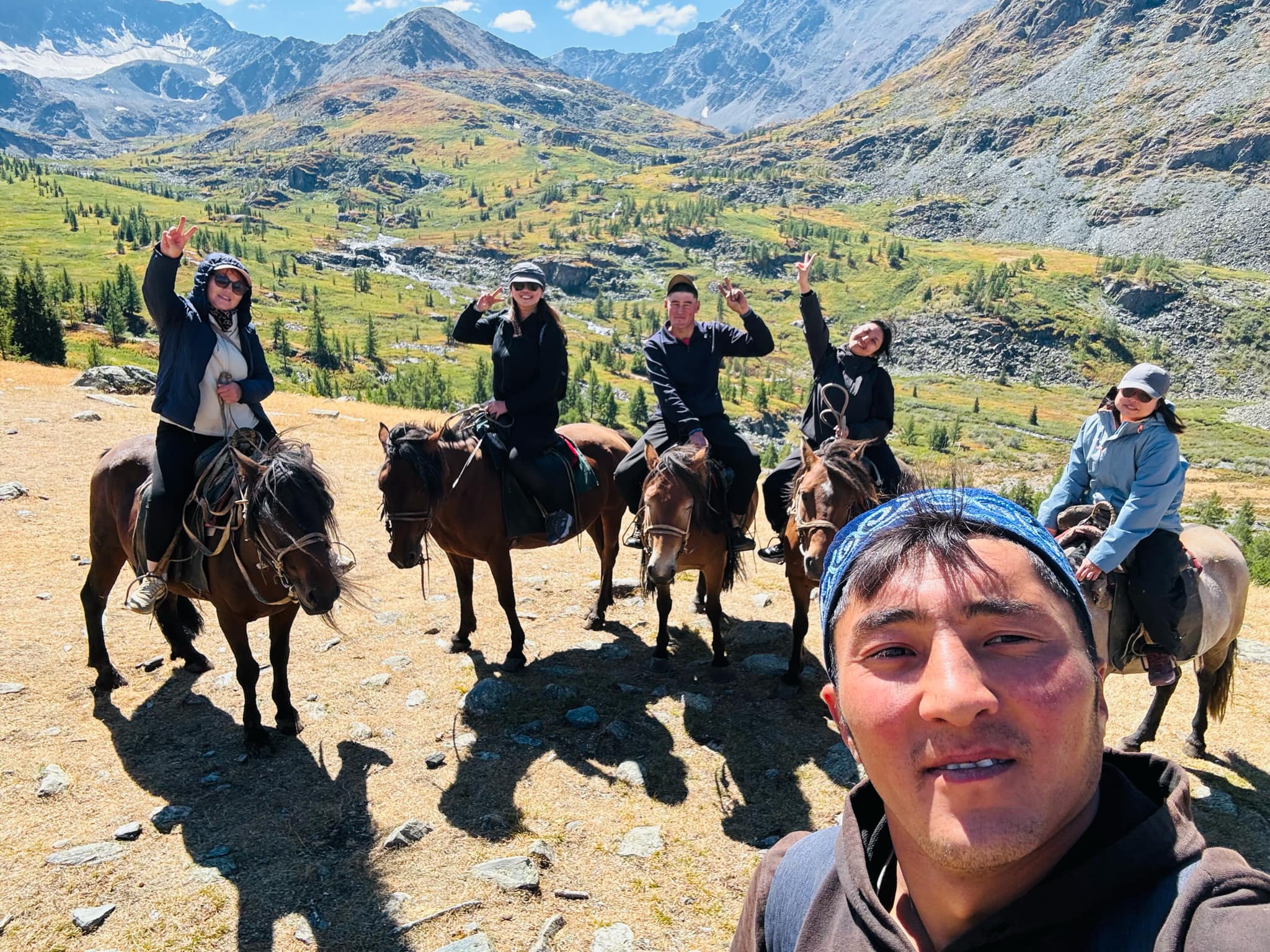
You will mount horses (driving is available if you do not have much horseback riding experience) and ride to a nearby mountain to see how Kazakhs hunt with Eagles. In the Altai Mountains, we encounter golden eagles and begin our search for furred animals. Hunting animals can take days at times. As a result, baits are used in the eagle hunting demonstration. Continue your exploration of the nomadic eagle hunter's life, hear stories, and see how the eagle is trained and treated.

Sleeping with family in wooden house ( B+L+D)

DAY 6 FLY BACK TO UB AND CITY TOUR


DAY 6 FLY BACK TO UB AND CITY TOUR

Following breakfast, your driver and guide will escort you to the airport. After a two-hour flight, you will meet another team in Ulaanbaatar and continue your journey with a visit to the Chinggis Khan Museum.

Chinggis Khaan National Museum was established in 2019 by the decision of the Prime Minister U.Khurelsukh. The museum has more than 10,000 original exhibits ranging from exhibits of Modun Shanyu, the founder of the first nomadic state to the artifacts the activities of the kings and nobles of the Mongolian states, from Modun Shanyu, the founder of the Hun Empire, the first nomadic state, to the beginning of the 20th century, the artifacts they enjoyed and used, and major real events. , VR, interactive, and video technology, painting, hand painting, sculpture, blacksmithing, sewing, embroidery, and models are exhibited.

The Chinggis Khaan National Museum was established in 2019 - 2022 on the Mongolian Plateau where the great khan was born. He was recognized as a man of the millennium, a founder of the modern world, and the one who declared world peace. This museum is one of the major developments of Mongolian culture, founded by the resolution of President U.Khurelsukh and funded by the Mongolian government.

Chinggis Khaan National Museum is equipped with modern standard technologies. It has 6 floors of exhibition halls, special event halls, conference halls, the Chinggis Khaan Hall of Fame, and a library. Over 100 professional employees are engaged in the museum. The Chinggis Khaan National Museum has three main sections, including the ancient states before Chinggis Khaan, the Mongol Empire period, as well as the great Khan’s descendants’ period. Over 90 percent of artifacts are original, and Chinggis Khaan National Museum exhibitions cover the entire history of Mongol states. In addition, the museum’s AR (augmented reality) and VR (virtual reality) technology can enhance the viewer’s experiences

ZAISAN HIL

This tall landmark in front of the city offers the best views of Ulaanbaatar and the surrounding nature. The large monuments on the top of the hill were erected for the memory of soldiers died in World War II.Zaisan Hill is a perfect blend of modern architecture and tradition and history. Until recently, it was most well-known for the Zaisan Hill Monument atop the hill, a beautiful circular structure with a mural honoring allied Mongol and Soviet soldiers who fell during World War II. Now the hill is also home to a sprawling modern complex with plenty of amenities for tourists and residents alike.

Choijin Lama Temple

Choijin Lama Temple under the Bond Khaganate

The Choijin Lama Temple complex was built between 1904 and 1908 at the order of the eighth Javzandamba Khutagt, spiritual leader of Mongolian Buddhism (or Bogd Khan) and later head of the Bogd Khaganate in Mongolia following its independence in 1911. The complex was dedicated to his younger brother, the sitting Choijin Lama, or protector of Buddhist teachings in Mongolia. The Choijin Lama served as the official state oracle of Mongolia and occupied the temple until his death in 1918.

One of the Few Surviving Historic Buddhist Buildings in Mongolia

In the 1920s, Communist revolutionaries took over the Mongolian government with the support of the Soviet Union and sought to suppress traditional religion around the country. Violent purges in 1937–38 led to the arrest and execution of thousands of lamas. All the monasteries in Mongolia—over 1,000—were shuttered, and most of them completely destroyed, including their contents of holy books and other religious objects. Only a few surviving buildings were nationalized and preserved for non-religious purposes—among them, the Green Palace or Winter Residence of the Bogd Khan, transformed into a museum, and the Choijin Lama Temple, which also survived intact. The site was converted into a Museum of Religious History in 1942, exhibiting artifacts from destroyed monasteries. While the purge of 1937–8 did not repeat itself, religious worship and ceremonies remained prohibited in Mongolia until 1990.

An Example of Chinese-style Religious Architecture

The temple of the Choijin Lama is an important example of Chinese-style religious architecture. The five temples included in the complex were built using blue bricks, with timber roofs supported on wooden posts and decorated with green tiles. Each temple was dedicated to a specific deity, including the Makhranz (or Maharajas—“great king” guardians of the four directions), the Shakyamuni Buddha, and the tantric deities worshipped by the Choijin Lama. The main temple is where the Choijin Lama would go into a trance and make oracular pronouncements to be interpreted by an attendant lama or monk.

2020 World Monuments Watch

In recent years, Mongolian Buddhism has experienced a steady revival as part of a national effort to strengthen Mongolian identity. The buildings of the Choijin Lama Temple complex and their collections constitute a unique resource and one of Mongolian Buddhism’s surviving links with the past. The site was included on the 2020 World Monuments Watch to lend support and visibility to the local and international efforts to design a master plan for the conservation of the site in partnership with the Arts Council of Mongolia. A Watch Day was held on May 17, 2020 at the site following lift on a ban of public activities in the country due do the COVID-19 pandemic. Activities included tree planting in the front yard of the temple, a papier-mâché art workshop for students, and a guided online tour of the site.

Restoring the Yadam TempleFollowing the creation of a conservation master plan in collaboration with the Arts Council of Mongolia (ACM), WMF organized a scientific advisory team to lend their expertise in support of the restoration of Yadam Temple in the Choijin Lama museum complex and develop local capacity-building activities focusing on traditional crafts and conservation techniques. Funded by the U.S. Ambassadors Fund for Cultural Preservation (AFCP) and the U.S. Embassy Ulaanbaatar, restoration work began at the site in May 2022 and was completed in October 2023, when an inauguration ceremony was held.

Located at the north end of the museum complex, the Yadam Temple houses a collection of copper and brass sculptures; scroll paintings; diverse artworks including papier-mâché sculptures and masks; engravings; textiles; silk appliqué; and instruments used for religious ceremonies. Eight of the objects displayed in the temple were included by the government in the list of exceptionally invaluable historical and cultural monuments of Mongolia.

Accotmodation: Hotel

DAT 7 GENGHIS KHAN’S STATUE


DAT 7 GENGHIS KHAN’S STATUE

See the largest horse statue in the world

Explore the small Archaeology Museum

Traditional lunch in the Ger/Yurt

Enchanting Aryabal Monastery: hike to this serene monastery

Terelj National Park's natural wonder: Turtle Rock

Genghis Khan’s Statue Complex

The statue is considered the world's largest equestrian statue and the largest horse-riding statue in the world. Explore the Archaeology Museum, Terelj National Park and Aryabal Meditation Temple.

Mongolia honor the wisdom of our monarch more than his victories. These days, Chinghis Khaan, the man of the millennium, is the subject of several honors. One of them is the enormous Genghis Khan statue that is located near the Tuul River. It is covered in 250 tons of lustrous stainless steel and stands 40 meters tall.

TERELJ NATIONAL PARK

We will pick you up at 8:30 a.m. from your current location. The tour will next proceed to the Genghis Khan statue. We will go to Terelj National Park after exploring the Genghis Khan statue complex. Gorkhi Terelj is one of Mongolia's most visited and interesting parks.Turtle Rock is also one of Terelj's most recognizable sights. Notably, just a few kilometers from Turtle Rock is another must-see attraction: the Ariyabal Meditation Temple.

One of the most beautiful spots in Gorkhi-Terelj National Park apart from its nature is Aryabal Temple. This hidden in the mountains temple is located nearby Turtle Rock, 56 km away from Ulaanbaatar city. Surrounding areas attraction full of granite formation set among scenic valleys and hills with a winding river and groves of trees.

Day 8 DEPATURE
Day 8 DEPATURE


DAy 8 DEPATURE

After breakfast driver will take you to the airport.

TOUR QUOTES:

3-4 PAX$186010-12 PAX $1550

6-9 PAX$170013-15 PAX $1380

What’s included in this tour?Highlight in red below what items are included in this tour.

•Accommodation Hotel/ Ger /Nomadic family Homestay

•Transfers upon arrival and departure

•English-speaking guide at all times

•Ground transportation: in the countryside by a chauffeured a Mini van

•Sightseeing as per itinerary

•Permits and fees for the national park

•All Meals during the trip

•Domestic flights round trip

•1 liter of drinking water per day per person

Tour price includes/ Tour price excludes

Tour Price includes

Tour price excludes